

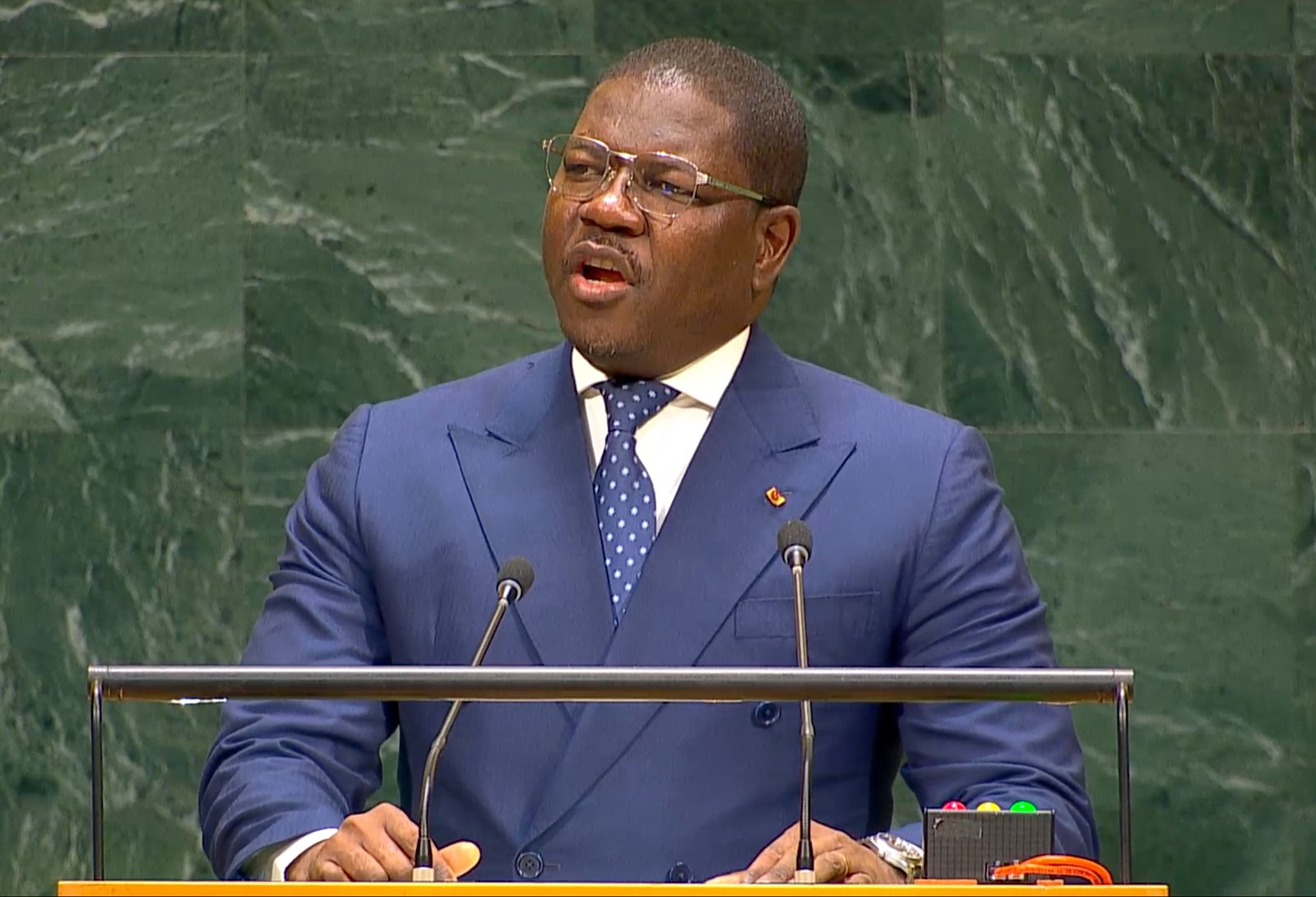
Ilídio Vieira Té, Prime Minister of Guinea-Bissau, said that at certain times, the UN has performed below expectations.
“This reality should not lead us to question the foundations of the multilateral system, but rather to strengthen the effectiveness, representativeness and capacity for action of international institutions,” he counselled, urging Member States to ensure multilateralism works for all.
He announced the completion of his country’s constitutional review process and the adoption by referendum of a new constitution on 30 August as “an important milestone”.
This, he said, followed the disruption of constitutional order on 26 November 2025 during its elections and the subsequent inauguration of a one-year transition period aimed at creating the conditions necessary to restore democratic rule.
“The Government is committed to creating the conditions necessary for the presidential and legislative elections, scheduled for 6 December of this year, to be held in an inclusive, free, transparent and credible manner,” he assured.
He further stated his country’s candidacy for non-permanent membership of the Security Council for the 2028–2029 term.
He pointed to the “enormous gaps” in financing-for-development and climate action programmes that fuel high levels of poverty, social inequality and rising unsustainable debt burdens on developing countries’ economies.
“No country, however powerful, can face today’s challenges alone.” Therefore, “we need more multilateralism, effective international cooperation and more united and determined collective action.”