


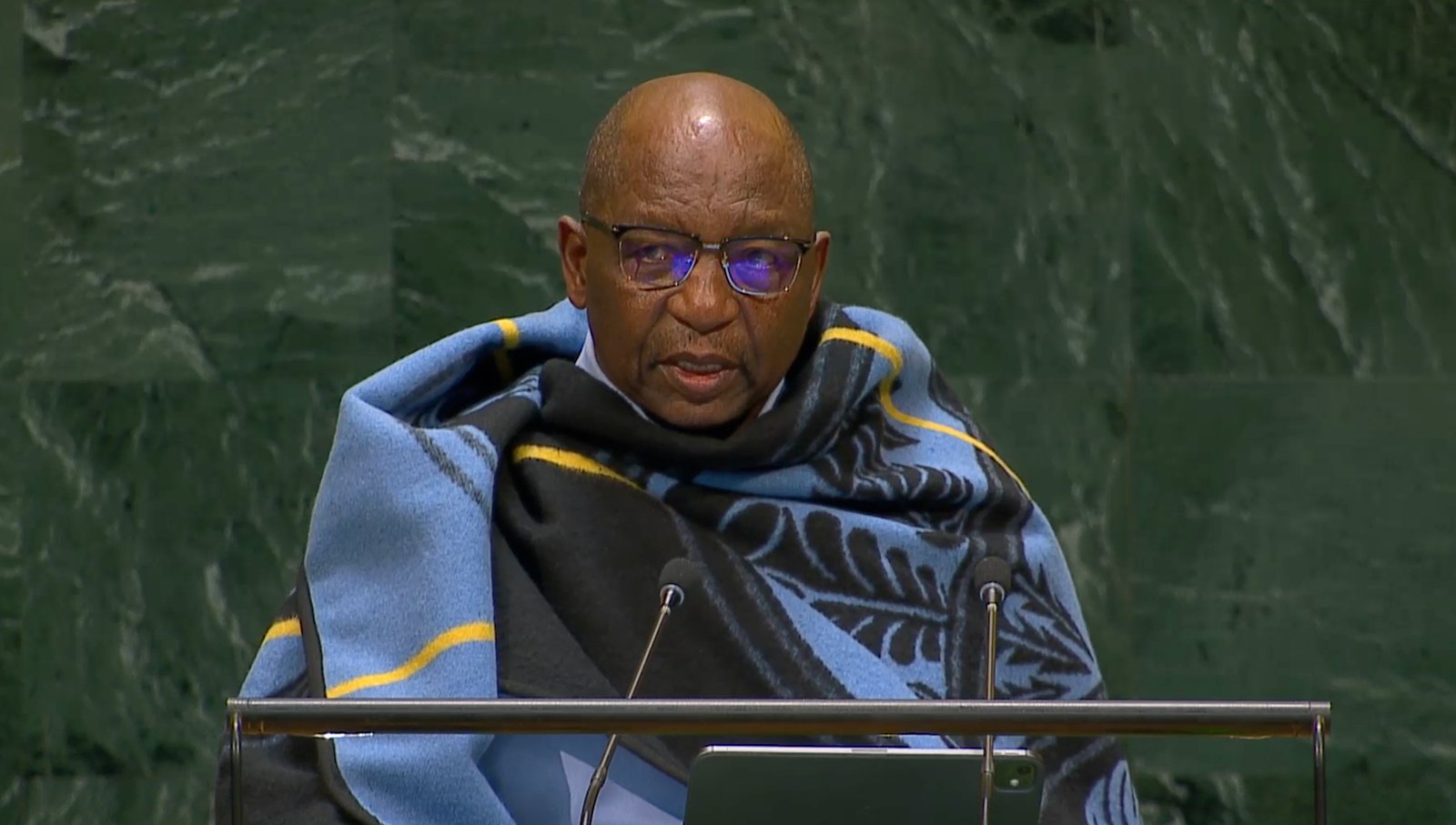
Samuel Ntsokoane Matekane, Prime Minister of Lesotho, called for a stronger and more responsive multilateral system, stressing that his country’s experience demonstrates the value of preventive diplomacy.
Lesotho, he said, has restored peace and stability after periods of political and security unrest, adding that “preventive diplomacy remains the most effective means of averting conflict and ensuring sustainable peace”.
“We recognize that a culture of peace requires strong institutions,” he added.
Turning to climate change, he cautioned that it is “no longer a future threat but a present reality”, pointing to increasingly “severe floods, droughts”, “unparalleled land degradation” and infrastructure damage.
Least developed countries such as Lesotho contribute little to global emissions yet bear a disproportionate burden, he said, calling on developed countries to provide adequate and accessible climate finance and technology.
“Climate justice demands nothing less,” he stressed, noting his country’s Just Energy Transition Fund aiming to expand renewable energy, create jobs and reduce dependence on migrant labour.
Turning to development, he said youth unemployment remains at 38 per cent and urged fulfilment of official development assistance commitments and called for international financial institutions to be fairer and just.
On migration, he said, it is “not an abstract concept” for Lesotho but “a daily lived reality”, benefiting both origin and destination countries.
“Protecting migrants’ dignity and freedoms, regardless of status, is not only a legal obligation, but it is also a moral imperative,” he stressed.
Backing Security Council reform giving African countries a stronger voice, he called for diplomatic solutions in Ukraine, the Middle East, Sudan and eastern Democratic Republic of the Congo.
He also urged investment in conflict prevention, good governance, and international cooperation, saying cooperation, solidarity, and shared responsibility remain the only viable path to a peaceful future.