

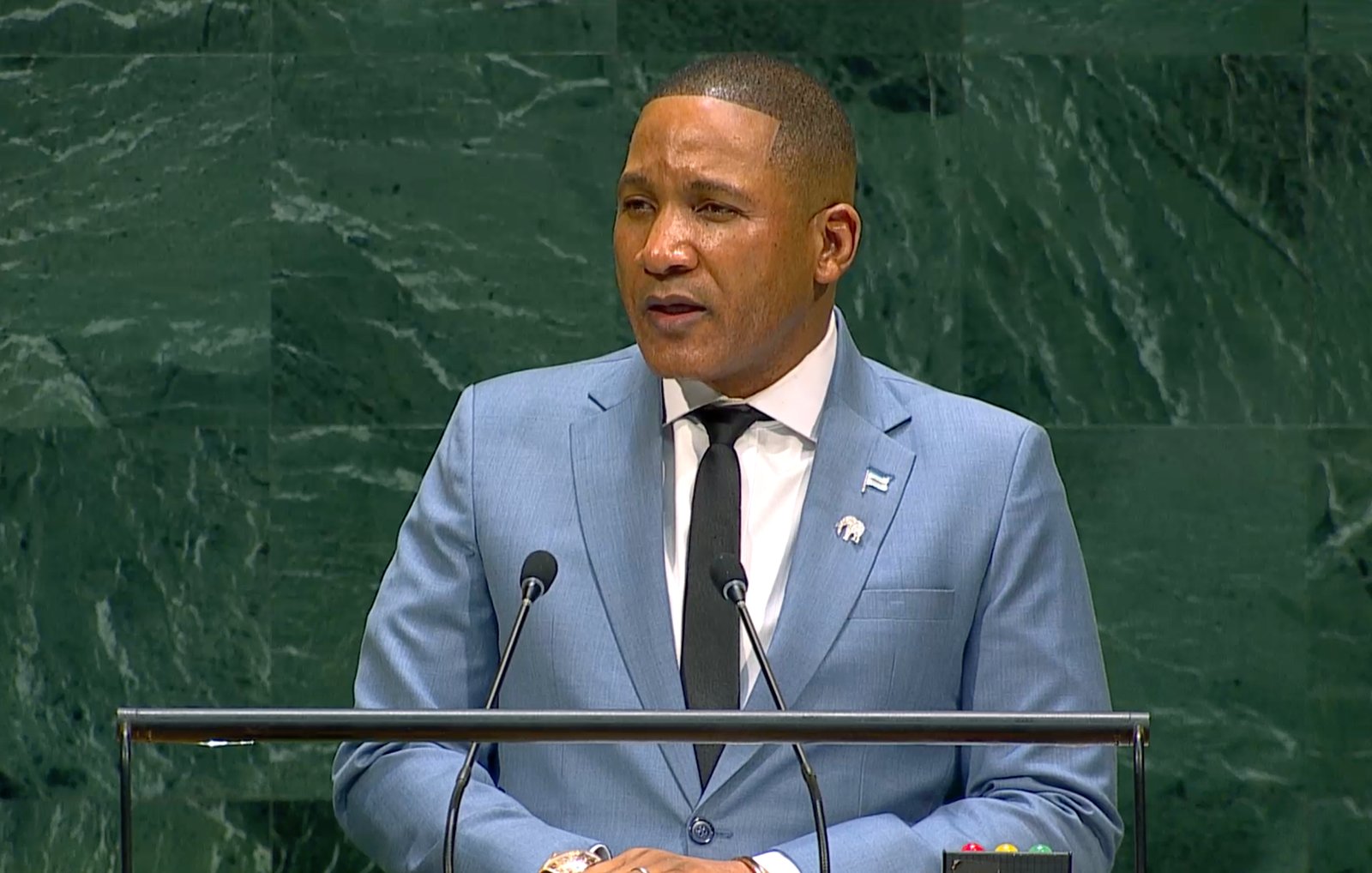
Spotlighting eroding trust between countries from conflict, and geopolitical tensions, Duma Gideon Boko, President of Botswana, said that the pertinent question is how to strengthen multilateralism so that the United Nations can deliver for all Member States.
In that vein, he said that restoring trust must begin with restoring respect for “sovereignty, territorial integrity and equal dignity of every nation regardless of its size, wealth or military power.”
He continued: “Botswana believes that rules that bind only the weak are not rules; and principles applied selectively soon cease to command respect,” and called on the Assembly to “recommit to dialogue as the first tool of diplomacy”.
He said that the international community’s commitments will be tested in development finance, as trust is strengthened when countries can invest in their people and international institutions can respond to shared threats.
The global financial architecture must be reformed for the twenty-first century, he declared, emphasizing the importance of funding responses to climate change and technological transformation.
He noted that it is more expensive for developing countries to borrow money than for wealthier counterparts, and debt sustainability is a marker of development fairness.
“When nations spend more to service debt than invest in education, job creation or provision of healthcare, trust in the system erodes,” he underlined, calling on the international community to provide fair access to concessional finance and to mobilise private capital to de-risk investment in developing economies.
Botswana is an example of national ownership and international solidarity working. Three decades ago, an HIV/AIDS epidemic threatened the country’s long-term national resilience.
However, through investment and sustained global partnership, the country was able to eliminate mother-to-child transmission of HIV, he said, emphasizing the importance of preserving the Joint United Nations Programme on HIV/AIDS (UNAIDS).