

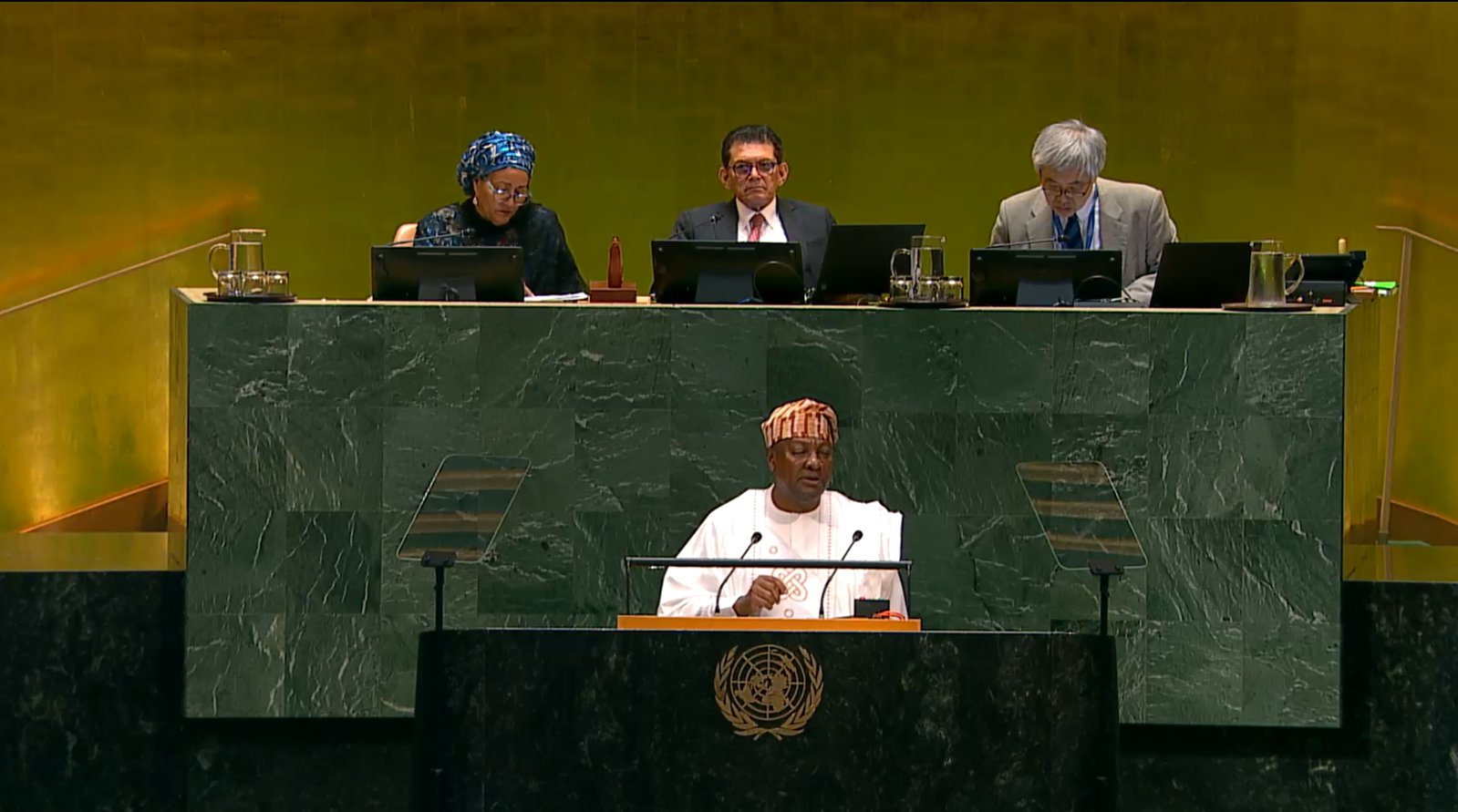
John Dramani Mahama, President of Ghana, said: “Belonging anchors us; it reminds us that we are part of a human story far larger than ourselves”. But belonging also has a dark side. “When weaponised by political expediency, it transforms into nativism, chauvinism, xenophobia and the dangerous prejudices extended to those who are deemed different,” he added.
“No race is superior. No nation is inferior,” he stressed, adding that “no child’s life is worth less because of the language they speak, the faith they profess, the colour of their skin, or the land of their birth”. This, he said, must remain the moral foundation of the United Nations.
He recalled his pledge last year to secure international recognition of the transatlantic trafficking and racialised chattel enslavement of Africans as the gravest crime against humanity — a position affirmed by the Assembly in March.
“Some cautioned that we were reopening old wounds,” he said, but “we came to seek healing”.
“Africa does not seek charity. Africa seeks equal partnership anchored in mutual respect,” he stressed.
Africa’s exclusion from permanent membership of the Security Council was “fundamentally unacceptable in the 21st century”, he said, calling for permanent representation with full rights and veto powers.
“Security Council reform is not a favour to Africa; it is an imperative for the legitimacy, credibility, and survival of the United Nations,” he added.
On global conflicts, he warned of “a dangerous drift toward unilateralism, lawlessness, and the erosion of multilateral norms”.
On Gaza, he urged the international community to “stop using diplomatic euphemisms to veil the human carnage”, while reaffirming support for a two-State solution and condemning “all acts of terrorism by Hamas”.
He called climate change “the ultimate test of global equity”, urging developed countries to provide “predictable, non-debt-creating grants”.