


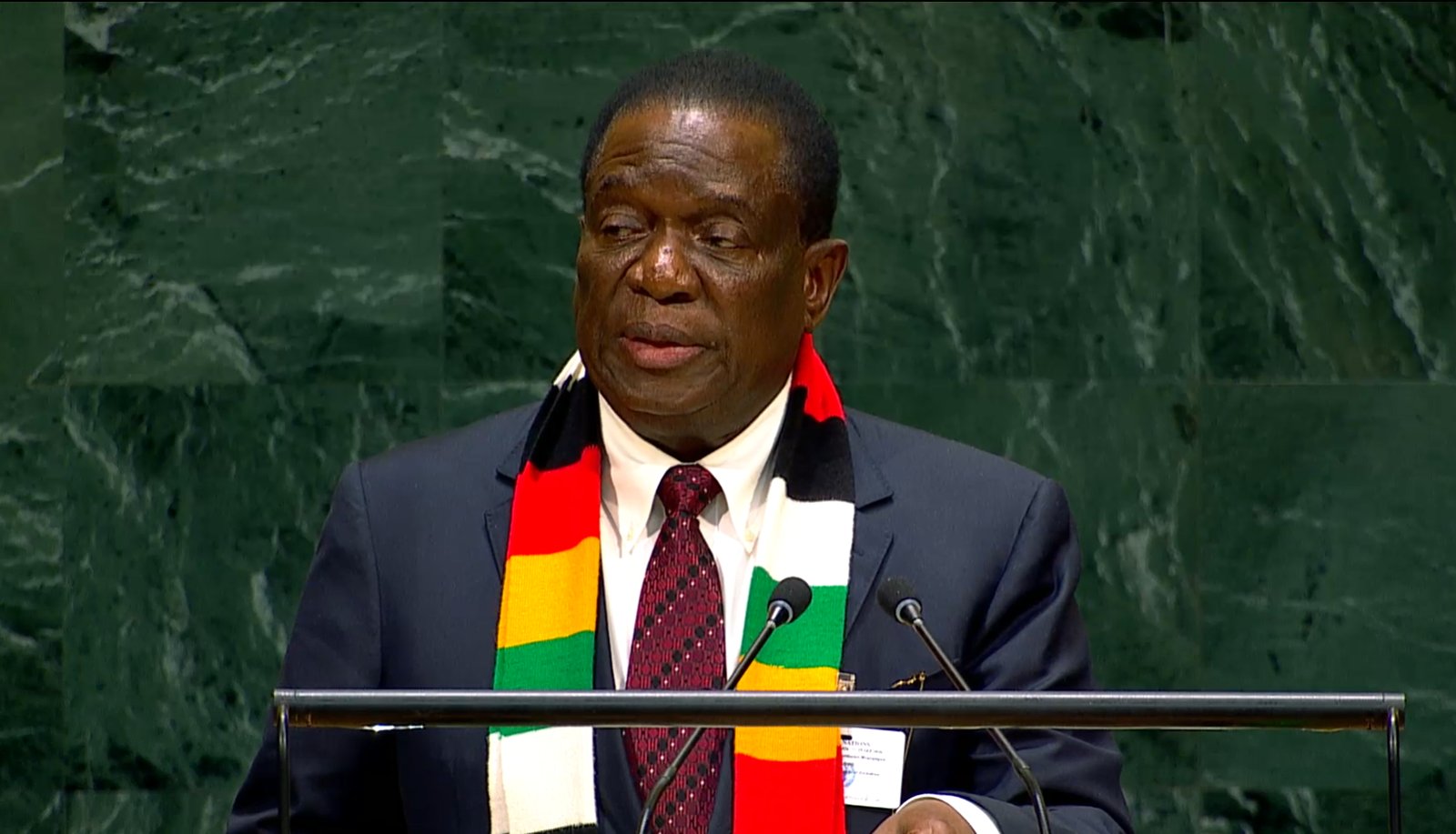
Emmerson Dambudzo Mnangagwa, President of Zimbabwe, said the world is facing numerous interconnected and complex crises, as conflicts are spreading, climate shocks are intensifying, and technology is advancing faster than the rules that govern it.
“Multilateralism is a crucial equalizer — it ensures that all have an equal voice under international law and an equal role in shaping our shared future,” he said, adding that the UN Charter remains the common compass.
International law cannot be a shield for some and their sword against others, he underscored, stressing: “The United Nations has a sacred duty to save succeeding generations from this scourge of war.”
“Our experience in southern Africa has taught us that dialogue is a shared fortitude and not a weakness,” he said.
Expressing gratitude for the confidence placed in Zimbabwe through its election to the Security Council, he declared: “My country will assume this responsibility in January 2027 with humility, independence and a readiness to serve, guided by a foreign policy of being a friend to all and an enemy to none.”
He outlined four priorities in the Council:
First, the promotion of preventive diplomacy, mediation and peaceful resolution while tackling the underlying causes of insecurity.
Second, the strengthening of cooperation between the United Nations and the regional organizations such as the African Union and its Peace and Security Council.
Third, rich heritage and natural resource elements must advance industrialization, modernization and the clean agenda for the prosperity of all and not to finance conflict.
Zimbabwe shall support Africa’s silencing the guns agenda and a stronger action against terrorism, organized crime, illicit arms flows and illegal resource trafficking.
“Finally, women and young people must share peace from the outset,” he stressed.
Recalling that Zimbabwe has more than 40 critical and rare earth minerals, he highlighted the country’s efforts to promote value addition and beneficiation at source, including the export of locally produced lithium sulphate, demonstrating that retaining value at the source is possible for shared prosperity.
He added that Zimbabwe’s national development initiatives have continued to be undermined by unilateral coercive measures imposed by some Western countries and called for their immediate and unconditional removal.